


What Is a Contact Sheet, and Why Do Collectors Want One?
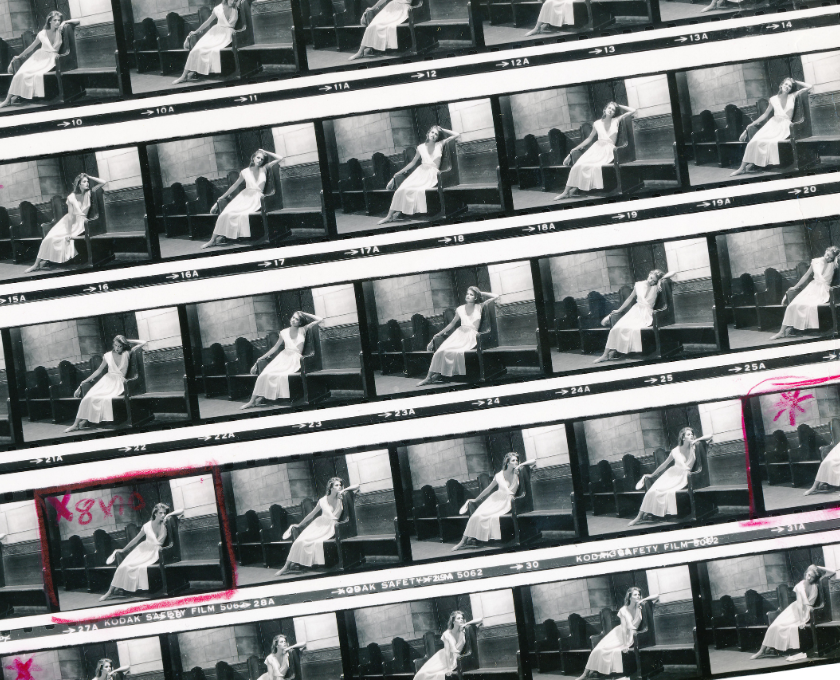
A contact sheet is a print of an entire roll of film, made by laying the negatives directly on photographic paper and exposing them to light, so every frame appears at its actual size. For photographers it was a working tool for choosing the one picture worth enlarging. For collectors today it is something rarer: a record of how a famous photograph was found.

What is a contact sheet in photography?
After developing a roll, the photographer cut the negatives into strips of five or six frames and pressed them against a sheet of paper under glass. That direct contact gives the sheet its name. A roll of 35mm film fits on one 8 x 10 inch sheet, while medium format rolls give larger frames, often twelve to a sheet. Contact sheets are also called proof sheets.
How did photographers use contact sheets?
With a loupe, the photographer studied every frame, then marked choices in grease pencil, usually red: a circle for a keeper, a cross for a reject, a line to show a crop. Paper, chemistry and time were costly, so only the marked frames went to the enlarger. Like a Polaroid test, the sheet was where the picture was decided.
Contact sheets were rarely meant to be seen. They show everything the final print leaves out: the hesitation, the near miss, the frame just before the right one.

Famous contact sheets in photography history
- Robert Frank, The Americans. Between 1955 and 1956, Frank shot more than 27,000 frames across the United States, made about 1,000 work prints, and kept 83 for the book. The National Gallery of Art holds his marked sheets, with squares, arrows, question marks and crosses.
- Bert Stern, The Last Sitting, 1962. Marilyn Monroe reviewed the sheets herself and crossed out the frames she rejected. Her marks became part of the work.
- Andy Warhol. In 2014, the Cantor Arts Center at Stanford University acquired 3,600 of Warhol's contact sheets, about 130,000 exposures made between 1976 and his death in 1987. He printed only about 17 percent of them, and the full archive is now online.
- Peter Hujar. The Morgan Library & Museum built its 2026 exhibition Hujar: Contact on an archive of more than 5,700 of his contact sheets.
- The New York Times archive. In August 2025, a feature by Anika Burgess, The Analog Allure of Photographers' Contact Sheets, used the paper's own sheets to show how grease pencil marks reveal the thinking of photographers and editors.
Why do collectors want contact sheets?
- They show the decision, not just the result. You see the frames around a famous picture, before and after it.
- They keep what was almost lost. A glance, a laugh, a pose abandoned: moments that never became the published image.
- The marks are the photographer's hand. Circles, crosses and stars turn a technical print into a record of judgment.
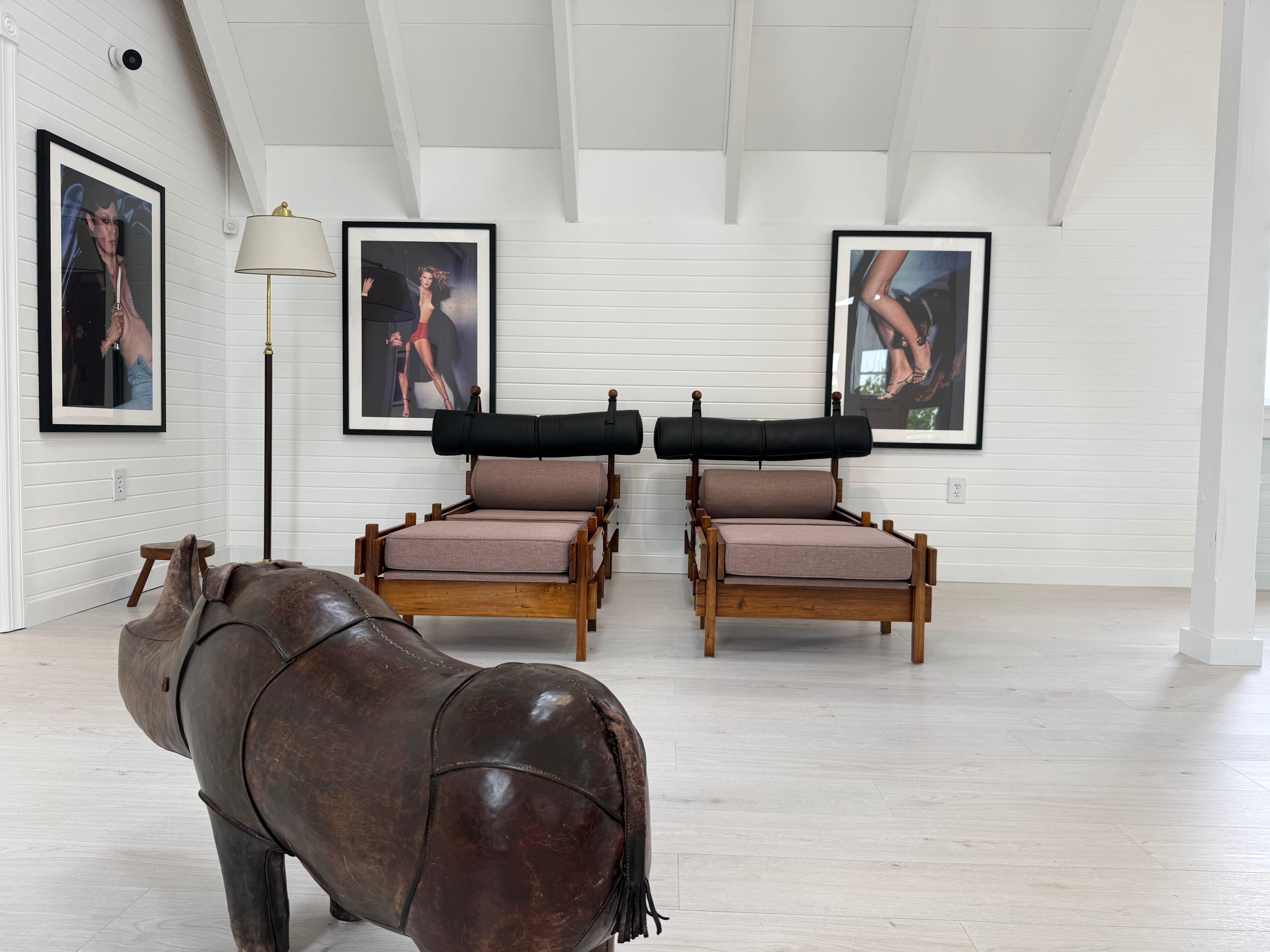
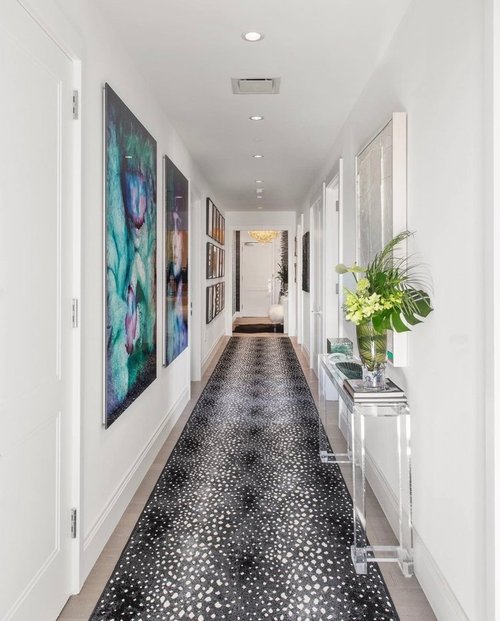
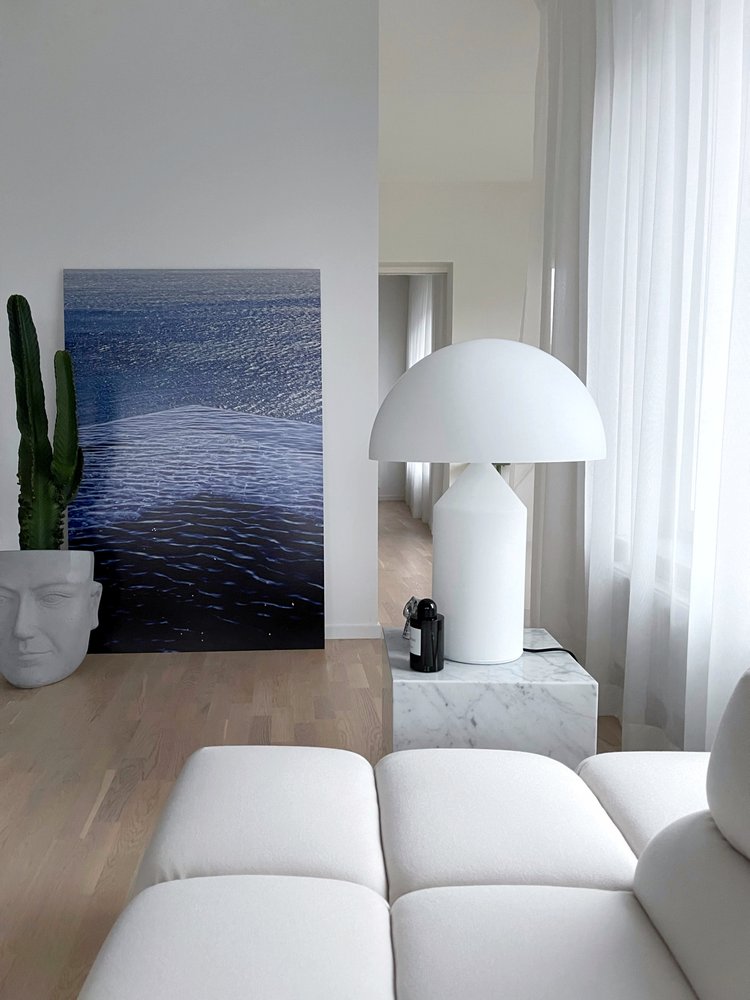
- They hold a wall. A grid of frames has rhythm and narrative, which is why a contact sheet works in a hallway, a library or above a desk, where a single image might feel too quiet.
- They belong to a finished era. Digital photography ended the contact sheet as a working tool. What remains is the record of the analog years.
Contact sheets in The Selects Gallery collection
Terry O'Neill, David Bowie, Los Angeles, 1974. Three sheets from a magazine session, Bowie with dyed red hair in a mustard yellow suit designed by Freddie Burretti. Posthumous estate stamped gelatin silver prints, embossed, in a limited edition of 50 plus 10 artist's proofs. Contact Sheet 01, 02, 03.
Justin de Villeneuve, Twiggy and David Bowie, Pin Ups, Paris, 1973. Shot in Paris in July 1973 for Vogue, with face masks painted by makeup artist Pierre Laroche. Bowie asked to use the picture for the cover of his album Pin Ups, and de Villeneuve agreed, at the cost of his relationship with the magazine. Editions of 50 in each of four sizes, hand numbered by the photographer. View the contact sheet.

Robert Farber, Gia Carangi for Bloomingdale's, 1978 and 1979. Farber photographed Gia, often with Debbie and Janice Dickinson, for Bloomingdale's advertising, including a session at Fordham University. Many sheets carry his pink grease pencil marks. Archival pigment prints, framed, 20 x 30 inches, edition of 8. Gia on a Pew, Gia in the Spotlight 1, Gia in a Trench, Gia and Debbie Dickinson.

Every work comes with a certificate of authenticity. Explore the contact sheet collection.
What to check before you collect a contact sheet
- Edition size. How many prints exist at that size, and how many artist's proofs.
- Process. Gelatin silver from the darkroom, or archival pigment, and who printed it.
- Authority. Signed and numbered by the photographer, or stamped and certified by the estate.
- The marks. Whether the photographer's original annotations appear, since they carry much of the appeal.
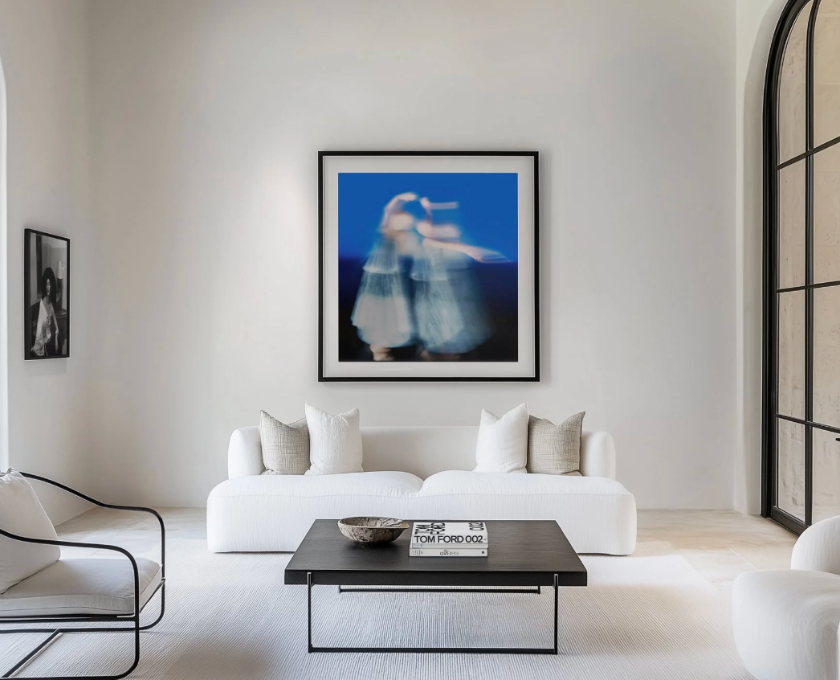
- Scale. Contact sheets are usually enlarged well beyond their original 8 x 10 inches so each frame reads from across the room.
For the full framework, read The Ten Essential Criteria for Collecting Fine Art Photography.
Frequently asked questions
Is a contact sheet the same as a proof sheet?
Yes. Both terms describe a print of a full roll of film at the size of the negatives.
Are the contact sheets you offer original darkroom sheets?
No. They are limited edition prints made later from the photographers' archives, authorized by the photographer or the estate, and each comes with a certificate of authenticity.
Do photographers still make contact sheets?
Editing software can still lay out digital images as a grid, but the marked sheet of film negatives belongs to the analog era.
How should a contact sheet be displayed?
Large enough that each frame reads from a distance, usually with a white mat and a simple frame. We advise on size and framing at contact@theselectsgallery.com.
Read next
- The Ten Essential Criteria for Collecting Fine Art Photography
- How a Photographer's Reputation Influences Art Value
- Collecting Photography: Subject Matter
Marie Audier D'Alessandris is the founder of The Selects Gallery and a writer for The Eye of Photography.