
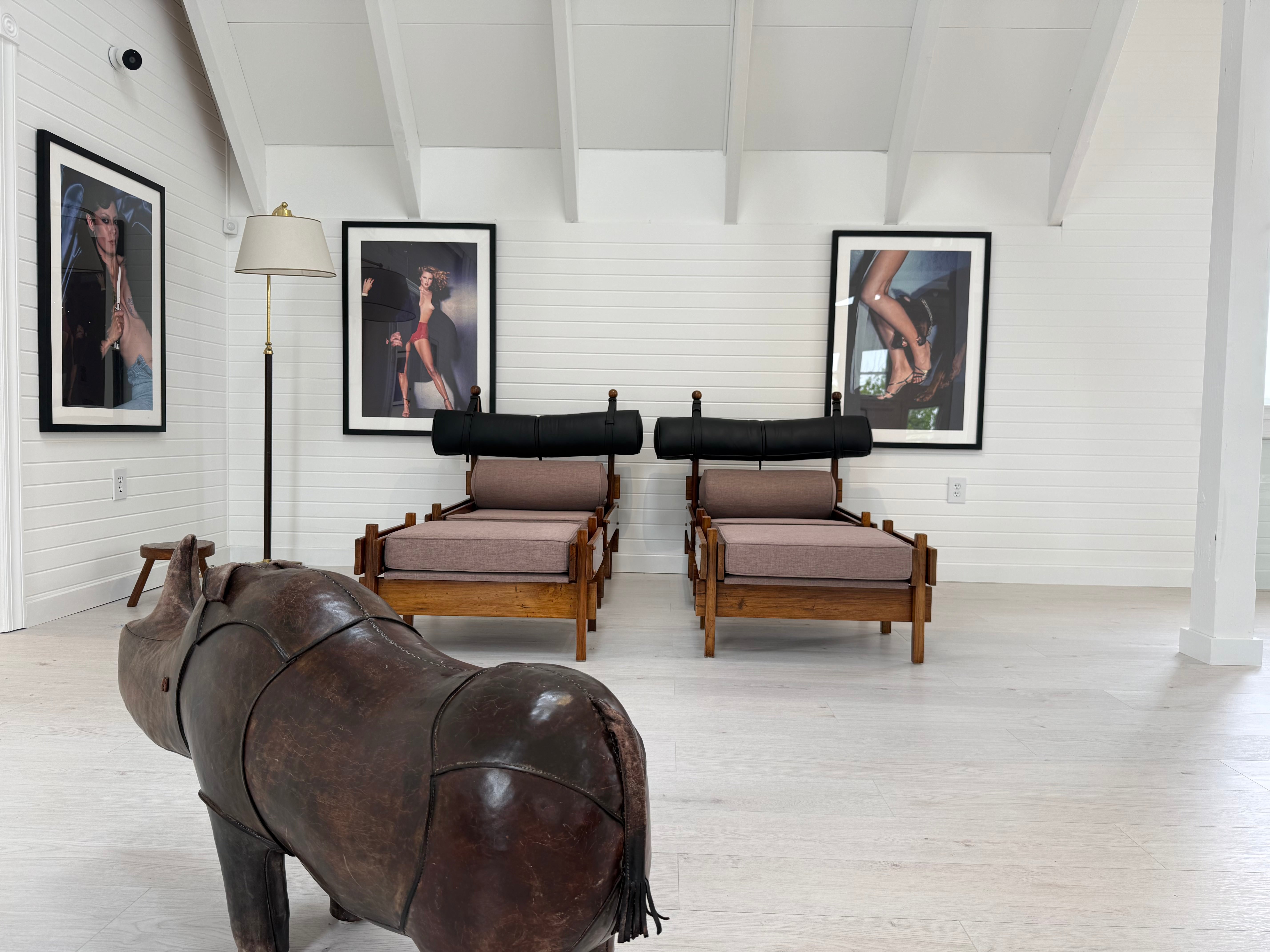



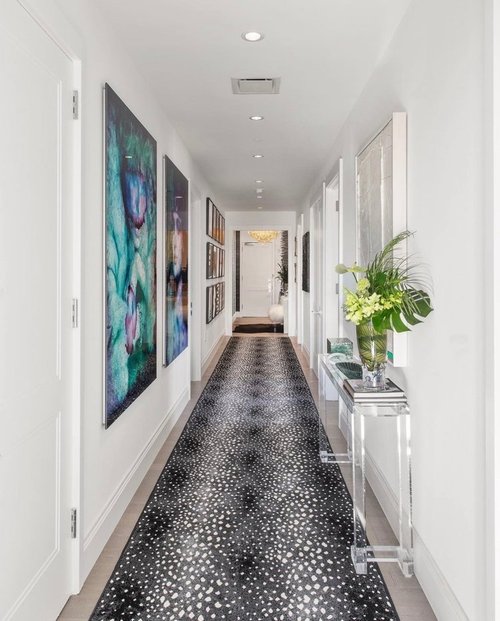
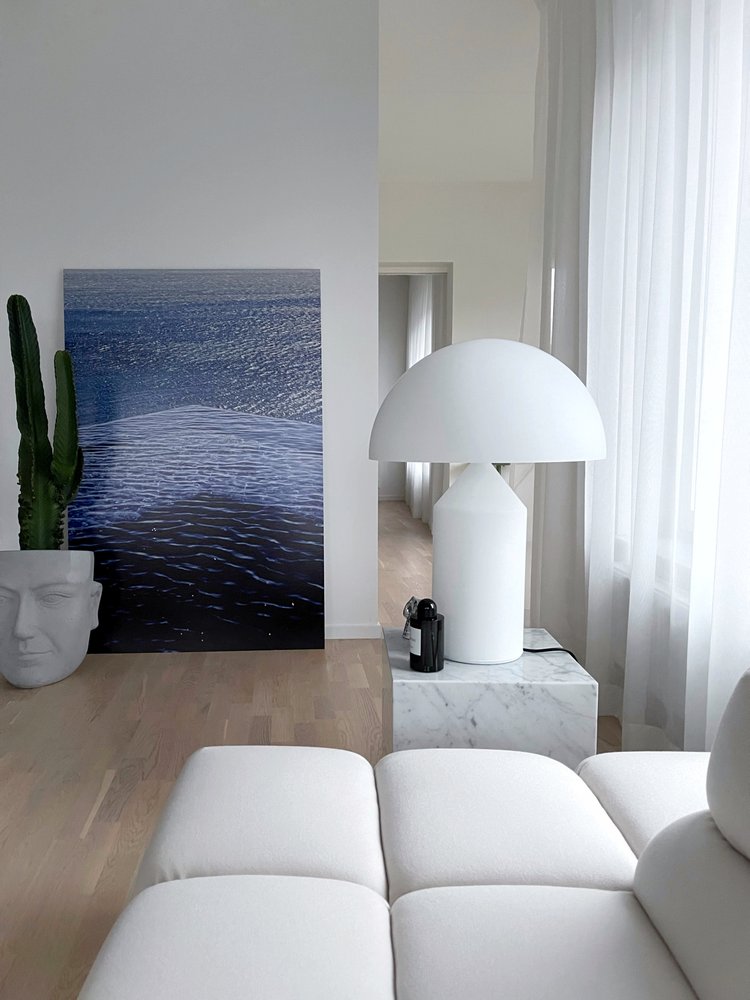

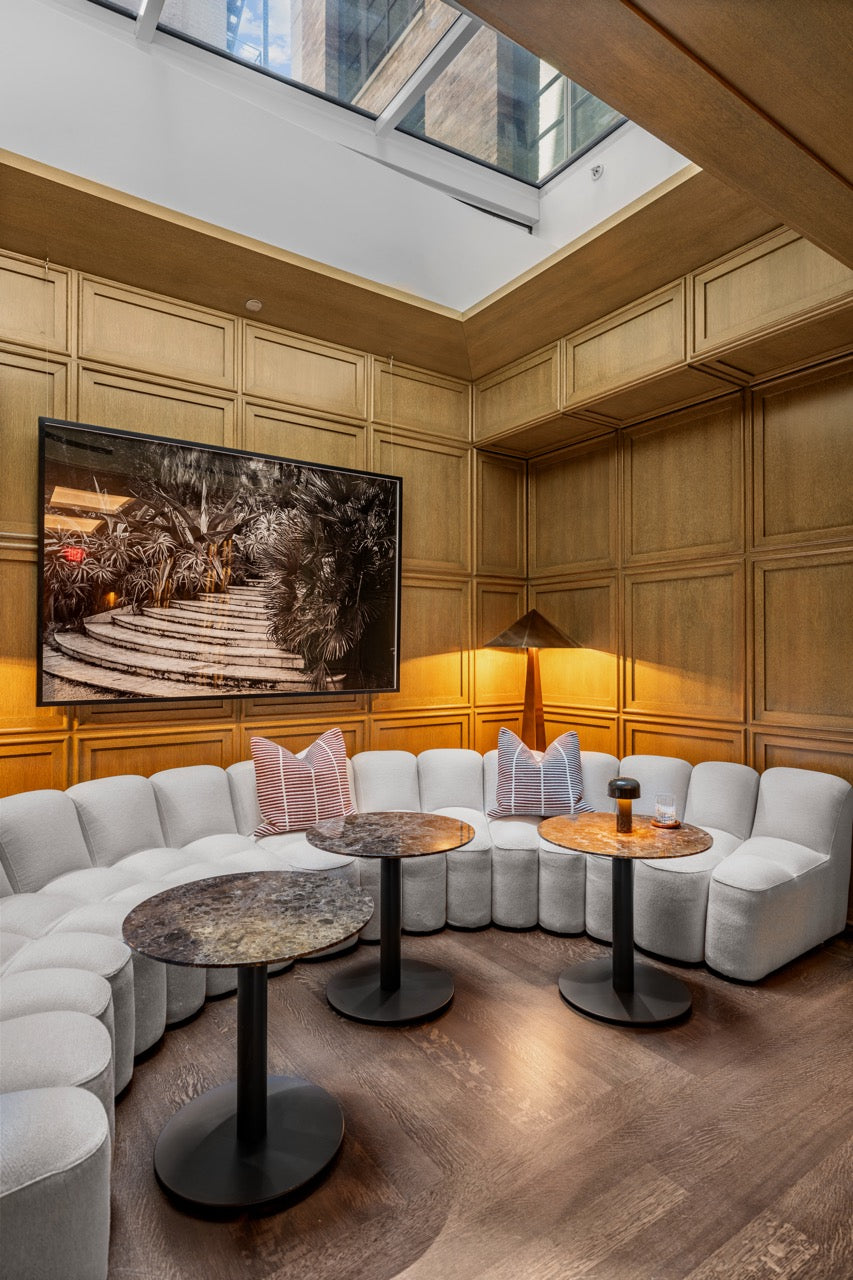
Our latest installation in Greenwich Village: A Photography Collection Shaped by Architecture inside a Robert A.M. Stern Resi dence
Interpreting the Past Through Photography
When curating this residence in a Robert A.M. Stern building in Greenwich Village, we found ourselves returning to one of the architect's own observations:
"We are always trying to interpret and reinterpret the past, as artists so often do."
The building itself is rooted in this idea. While its classical proportions acknowledge New York's architectural heritage, it is unmistakably a contemporary residence. Rather than recreating the past, it reinterprets it.
That same principle guided the selection of photographs throughout the home.
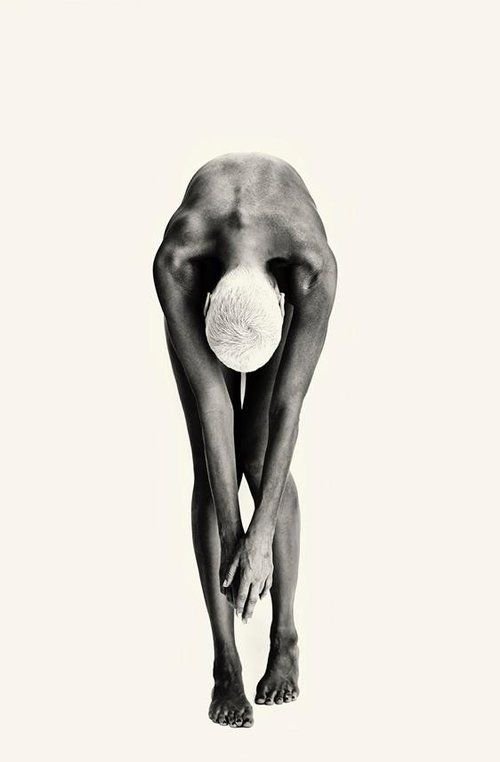
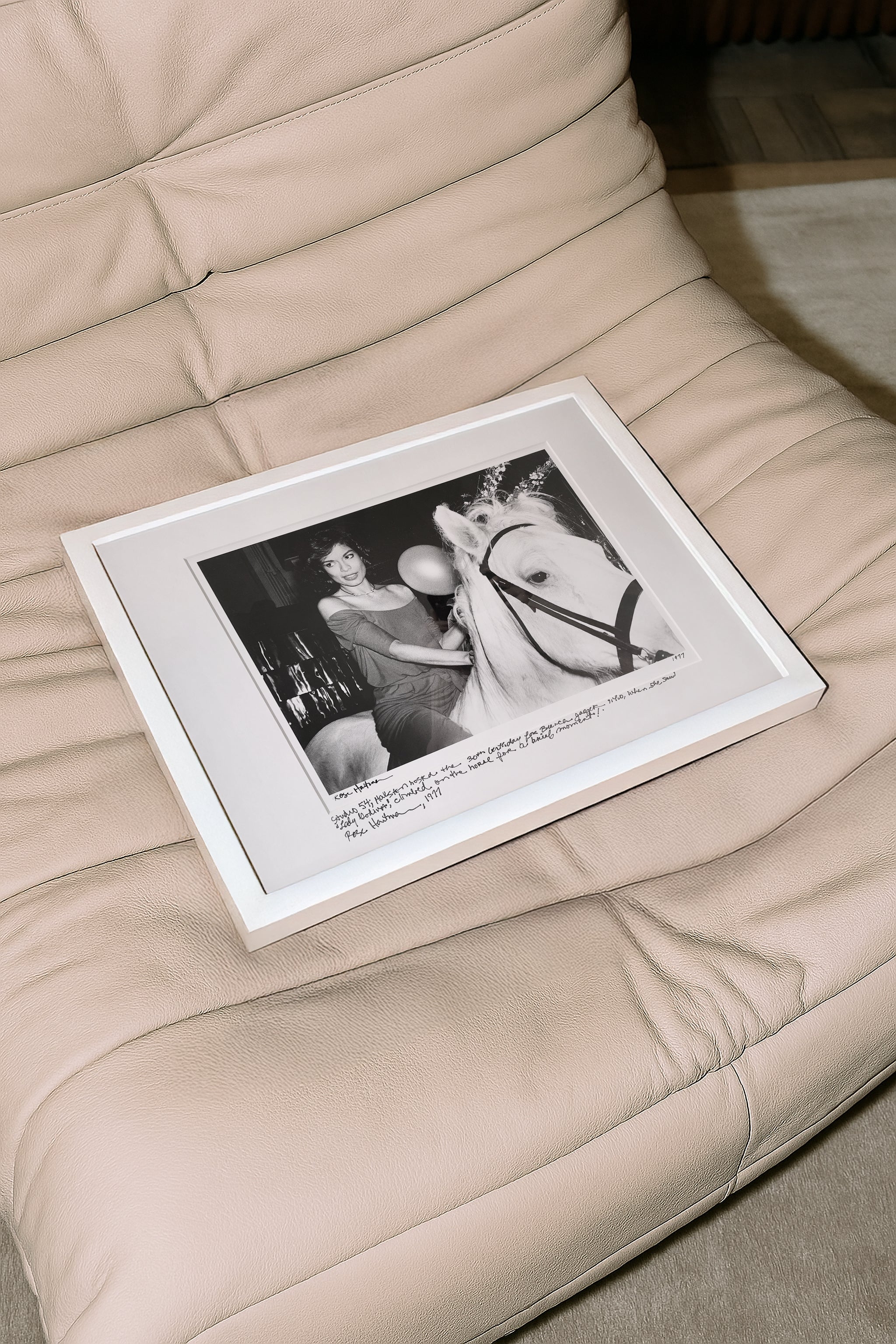
Although created by different artists, across different decades and locations, each work in the collection revisits a familia r subject and invites us to see it differently.


Jacques Olivar's America
One of the focal points of the collection is Long Drive, Nevada (2005) by Jacques Olivar.
At first glance, the image feels deeply American. Two boys stand atop a vehicle against the vast openness of the Nevada lands cape, embodying a spirit of freedom, adventure, and youthful confidence.
Yet the photograph avoids the clichés often associated with the American road. Instead, Olivar captures a moment that feels b oth cinematic and authentic. The image is less about a destination than about possibility itself.
Within the residence, the photograph introduces a sense of openness and energy that balances the formality of the architecture. It brings movement into a space defined by proportion and structure.


André Carrara and the Poetry of Architecture
If Olivar's photograph introduces movement, André Carrara's L'Escalier, Naples (1999) provides a counterpoint.
The photograph transforms an architectural staircase into a composition of lines, light, and shadow. Carrara's gift lies in h is ability to elevate everyday urban environments into something quietly extraordinary.
Like Stern's architecture, the image relies on discipline rather than spectacle. The strength of the work comes from its proportions, rhythm, and restraint.
Placed within a residence designed by one of America's foremost architects, the photograph becomes more than an image of a st aircase. It becomes a reflection on architecture itself and on the beauty of spaces designed to be lived in.


Robert Farber's Wet Series
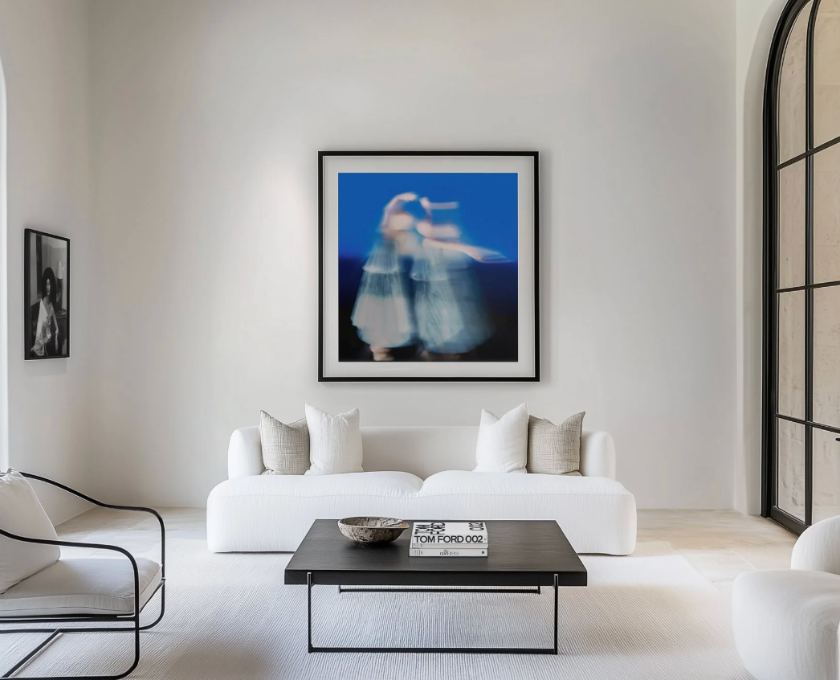
The living area is anchored by two photographs from Robert Farber's celebrated Wet Series: Jazz (2018) and Diner (2018).
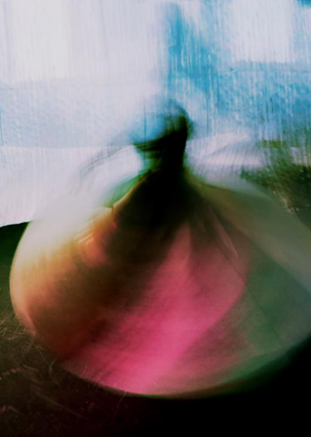
Created through rain-covered windows and reflective surfaces, these photographs occupy a fascinating space between photography and painting. Familiar scenes dissolve into color, light, and texture, creating images that feel simultaneously contemporary and timeless.
In Jazz, reflections and moisture soften the boundaries between subject and atmosphere. The image evokes the energy of music without illustrating it directly. It is immersive and emotional, inviting viewers to experience the mood rather than simply observe the scene.
Diner revisits one of the most iconic symbols of American culture. Yet Farber avoids nostalgia. Through distortion and reflection, the familiar becomes unfamiliar again. The diner remains recognizable, but it is transformed into an exploration of memory, light, and perception.
Together, the two works bring a sense of warmth and fluidity to the collection. Their painterly quality creates an elegant contrast to the sharper architectural lines found elsewhere in the home.


Robert Farber's Polaroids
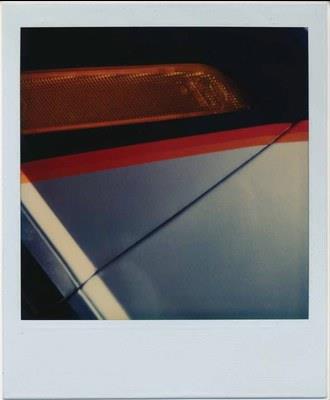
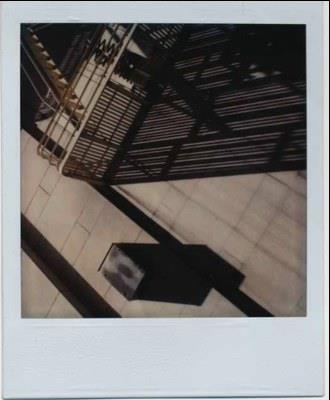
Completing the installation are two original Polaroids by Robert Farber.
Unlike finished editioned photographs, Polaroids reveal something of the artist's process. They possess an intimacy that is d ifficult to replicate in any other photographic format.
Their scale encourages close viewing, drawing collectors into the image rather than commanding attention from across the room . They function almost like personal notes from the artist, offering a more direct connection to Farber's eye and creative practice.
Within the collection, they provide an important counterbalance to the larger works, reminding us that photography can be bot h monumental and deeply personal.
A Collection Built Around a Shared Idea
What ultimately connects these photographs is not subject matter or style.
It is their shared ability to reinterpret familiar themes: the road, the city, architecture, music, the diner, and the photog raphic image itself.
Each artist begins with something recognizable and transforms it through a distinct point of view.
That approach mirrors the philosophy embodied by the architecture surrounding them. The result is a collection that feels per fectly at home within this Robert A.M. Stern residence: respectful of history, engaged with the present, and designed to reveal new details over time.