









Photography Celebrated as National Heritage
As France prepares to mark the 200th anniversary of photography, the 2026–2027 bicentennial represents more than a commemorative milestone. It signals a powerful repositioning of the medium itself.
Long described as a “young medium” within art history, photography now enters a new phase of historical legitimacy. Anniversary celebrations tend to generate what might be called narrative gravity: they prompt major retrospectives, scholarly publications, expanded public programming, and significant media attention. Institutional emphasis often reverberates outward—art fairs such as Art Basel and Frieze frequently mirror museum priorities, while heightened curatorial focus can drive auction visibility, secondary market growth, and the entry of new collectors.
Major institutions, including the Museum of Modern Art and the J. Paul Getty Museum, have long championed photography through dedicated departments and acquisitions. Yet milestone anniversaries amplify that commitment, reinforcing photography’s status not simply as a modern innovation, but as cultural heritage.
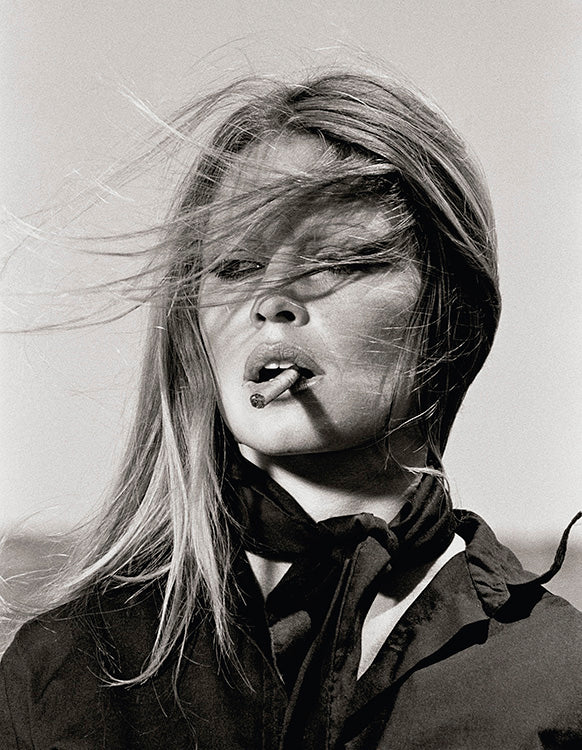
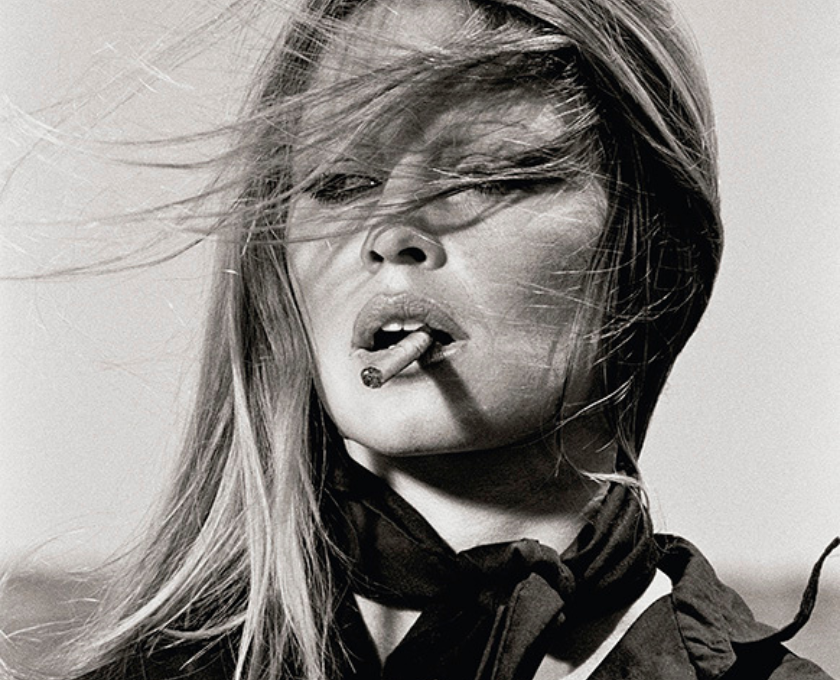
Brigitte Bardot Smoking Cigar, 1971 - Terry O'Neill
A National Celebration in France
The French Ministry of Culture has officially announced a nationwide celebration of photography’s bicentennial in 2026–2027. Minister of Culture Rachida Dati has called for a large-scale public celebration across France, honoring both the invention of photography and its enduring legacy over the course of more than a year.
The invention of photography is attributed to French inventor Nicéphore Niépce, who produced the first known permanent photograph in 1826–1827. This bicentennial offers an unprecedented opportunity to celebrate photography and its central role in cultural history.
France holds major photographic collections, hosts internationally recognized festivals and specialized fairs, and benefits from a vast network of institutions and publishers dedicated to the medium. The bicentennial aims to highlight these collections and expand public access to them.
A scientific committee chaired by Dominique de Font-Réaulx—Chief Curator at the Louvre and a specialist in 19th-century art and photography—will oversee the artistic and scholarly direction of the program, bringing together leading experts in the field.
Program Highlights
A major manifesto exhibition at the Grand Palais in partnership with the Centre Pompidou
A historical exhibition centered on Nicéphore Niépce
Events throughout France
A national commission titled Reinventing Photography
Open calls for projects aimed at professionals and the general public
Minister Dati emphasized that photography, born in France two centuries ago, has become an integral part of daily life, evolving from daguerreotypes to selfies.
The scientific committee further noted that photography has become one of the most democratic forms of artistic expression, shaping and recording our collective history for the past 200 years.
In this context, the bicentennial does more than honor an invention: it reframes photography as a foundational pillar of cultural heritage, reinforcing its historical depth, institutional weight, and lasting influence on both artistic and market narratives.

Inside Cannes, Doutzen on a boat, 2011 - Kenneth Willardt